
Usecases
Usecases
Back to blogs
Customer Data and Analytics
Understanding Customer Lifetime Value for D2C Brands
By
Abhimanyu Atri
Marketing Product Manager
1 min read

TLDR
Customer lifetime value (CLV) is the total net profit a customer generates across their entire relationship with your brand, including repeat purchases and referrals, not just their first order
The core formula:
CLV = (average order value × purchase frequency × gross margin) ÷ churn rate. All four inputs are available in standard e-commerce reportingThe CLV-to-CAC ratio is the single most useful diagnostic in D2C performance marketing. 3:1 is the healthy benchmark; below 2:1 means you're likely acquiring at a loss; above 5:1 suggests underinvestment in growth
D2C brands are uniquely positioned to act on CLV because they own first-party customer data, control the retention experience, and carry the full margin stack
Segmenting customers by CLV tier changes budget allocation: high-CLV segments justify higher acquisition spend even at higher CAC, while low-CLV segments signal acquisition strategy problems
Retention is the highest-leverage input. Email personalization, loyalty programs, timed cross-sells, and retargeting move churn, and even small churn reductions compound into large CLV gains
Why should performance marketers care about customer lifetime value?
To run performance marketing efficiently, it is important that D2C brands understand Customer Lifetime Value (CLV). With this metric, brands can allocate the right budget to the right audiences, calculate the correct return on investment (ROI) for their marketing activities, and ultimately attract the most valuable customers to the brand. In the long run, the brand can grow sustainably with its most valuable customers, rather than focusing in the short term on acquiring new customers to drive up volume.
Performance marketing and customer lifetime value are two sides of the same coin. The CLV will tell you how much value a customer is worth over time, while the performance marketing will tell you how you spent your money to get the customer in the first place. So, a brand that truly wants to grow, not just acquire new customers, must have a grasp of both metrics.
What is performance marketing, and why does it matter for D2C brands?
Performance Marketing is a branch of digital marketing where advertisers pay only for specific, measurable actions. Each desired action, such as clicks to a website, new leads captured, and online sales, can be instantly monitored and measured with a price tag attached. You can read more about Performance Marketing in our comprehensive guide here.
For D2C brands, the structure is almost a necessity. You don't have a retailer absorbing some of the risk. Every acquisition cost lands directly on your books. Performance marketing enforces that discipline, and CLV tells you whether you’re measuring the right return.
What is customer lifetime value (CLV)?
CLV is the total net profit you can realistically expect from a single customer over the full course of your relationship with them. Not the first order. Not the best month. The whole thing — repeat purchases, eventual churn, referrals if they happen.
It's a deliberately long view. Two customers might place the same first order, but one comes back six times a year for three years and refers two friends. The other never returns. Their CLV isn't even close and treating them the same way — same acquisition spends, same retention effort — is a costly mistake.
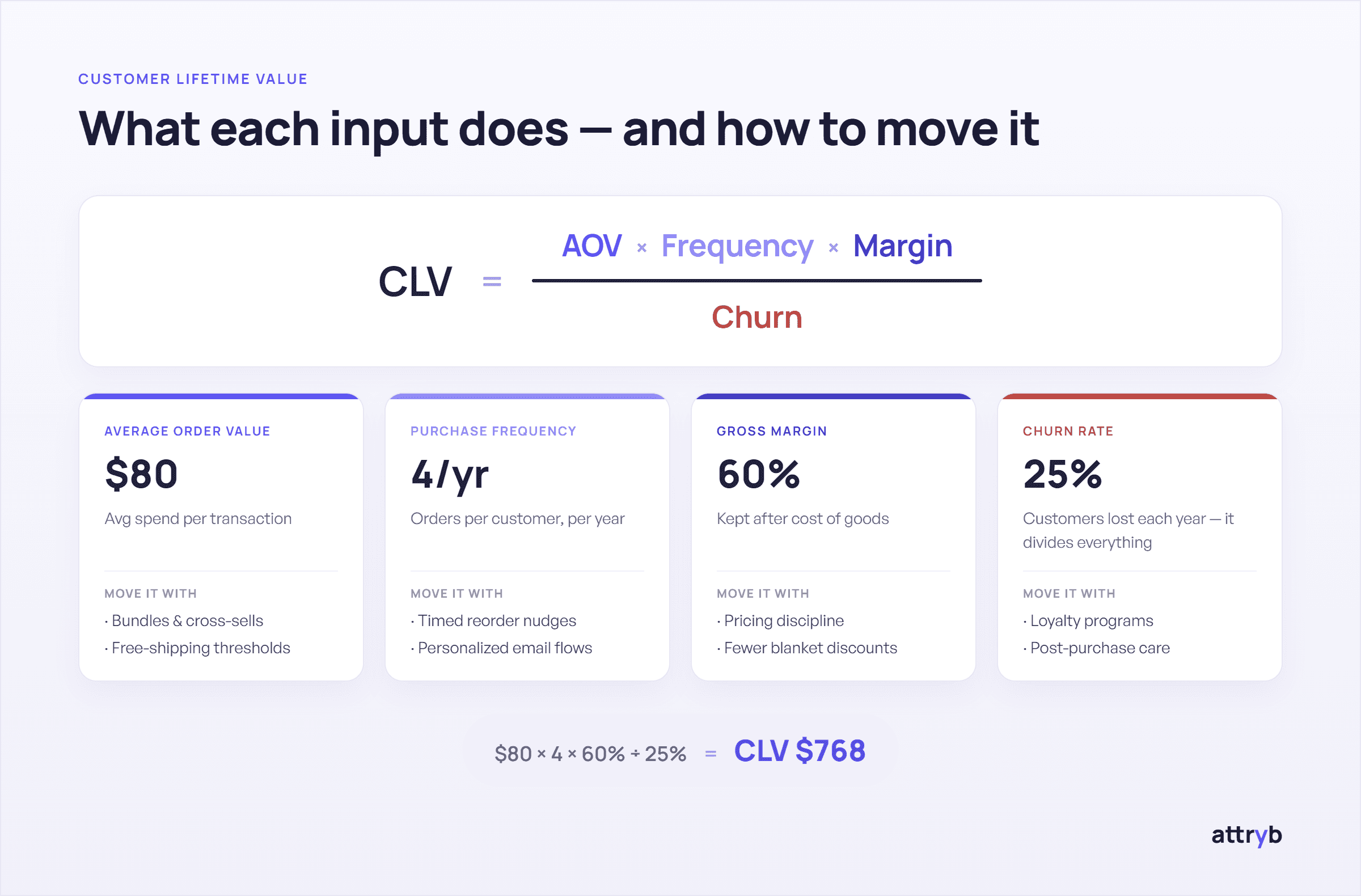
Figure 1. Calculating CLV
How do you calculate CLV?
The standard formula most brands start with:
CLV = (Average Order Value × Purchase Frequency × Gross Margin) ÷ Churn Rate
Average order value (AOV): What the average customer spends per transaction.
Purchase frequency: How many times they buy in a given period.
Gross margin: Revenue minus cost of goods sold, divided by revenue.
Churn rate: The percentage of customers who stop buying over a given period.
Even the smallest variations in individual components have a significant effect on the calculated CLV. For example, a decrease of 10% in the churn rate will immediately increase the CLV of all customers by a large amount. That’s the leverage that makes CLV worth tracking closely.
What are the key factors that drive CLV?
Customer acquisition cost
CAC is what you spend to turn a prospect into a paying customer. The problem isn't having a CAC — it's having one that's out of proportion to what customers are actually worth. The benchmark most growth teams use is a CLV-to-CAC ratio of at least 3:1. Anything below 2:1 and you're probably acquiring customers at a loss when you factor in margin. Anything above 5:1 might mean you're leaving growth on the table.
Gross margin per customer
The difference between the revenue generated and the cost of goods sold (COGS). Higher margins generally yield a higher CLV.
Retention rate and churn
Retention Rate is the percentage of customers who remain active over a given time. The Churn Rate measures how quickly customers drop off. A brand retaining 85% of customers year-over-year builds a very different business than one retaining 70%, even if all other variables look similar. Loyalty programs and good post-purchase communication are the two most reliable tools for moving this number.
Referral value
Some customers bring in other customers. That referred revenue reflects the original customer's economic contribution to your brand, even if standard CLV formulas exclude it. For subscription and SaaS businesses especially, referral value adds a meaningful dimension to CLV that pure transactional metrics miss.
Customer satisfaction and lifecycle stage
CLV is also affected by customer satisfaction. Satisfied customers behave differently than unsatisfied ones, as they buy more frequently and refer their friends and family more freely.
Understanding the behavior of new customers compared with repeat customers is essential for maximizing returns. Therefore, customers need to be segmented by their lifecycle stage (new, repeat, loyal) to accurately understand their CLV and invest in the most optimal way.
How does CLV vary across different industries?
Across several industries, a customer's CLV can vary quite a bit. Luxury fashion brands often see infrequent purchases at high AOV. Fast-moving consumer goods brands see the reverse. Neither is better - what matters is whether the CLV-to-CAC ratio holds given the economics of that specific category.
E-commerce brands face return rates and shipping costs that compress margins and, in turn, CLV. D2C brands can partially offset this by improving retention and building direct customer relationships. SaaS and subscription businesses tie CLV almost entirely to churn - which is why those companies track monthly recurring revenue so obsessively. One percentage point of churn in a subscription model matters more than most other metrics combined.
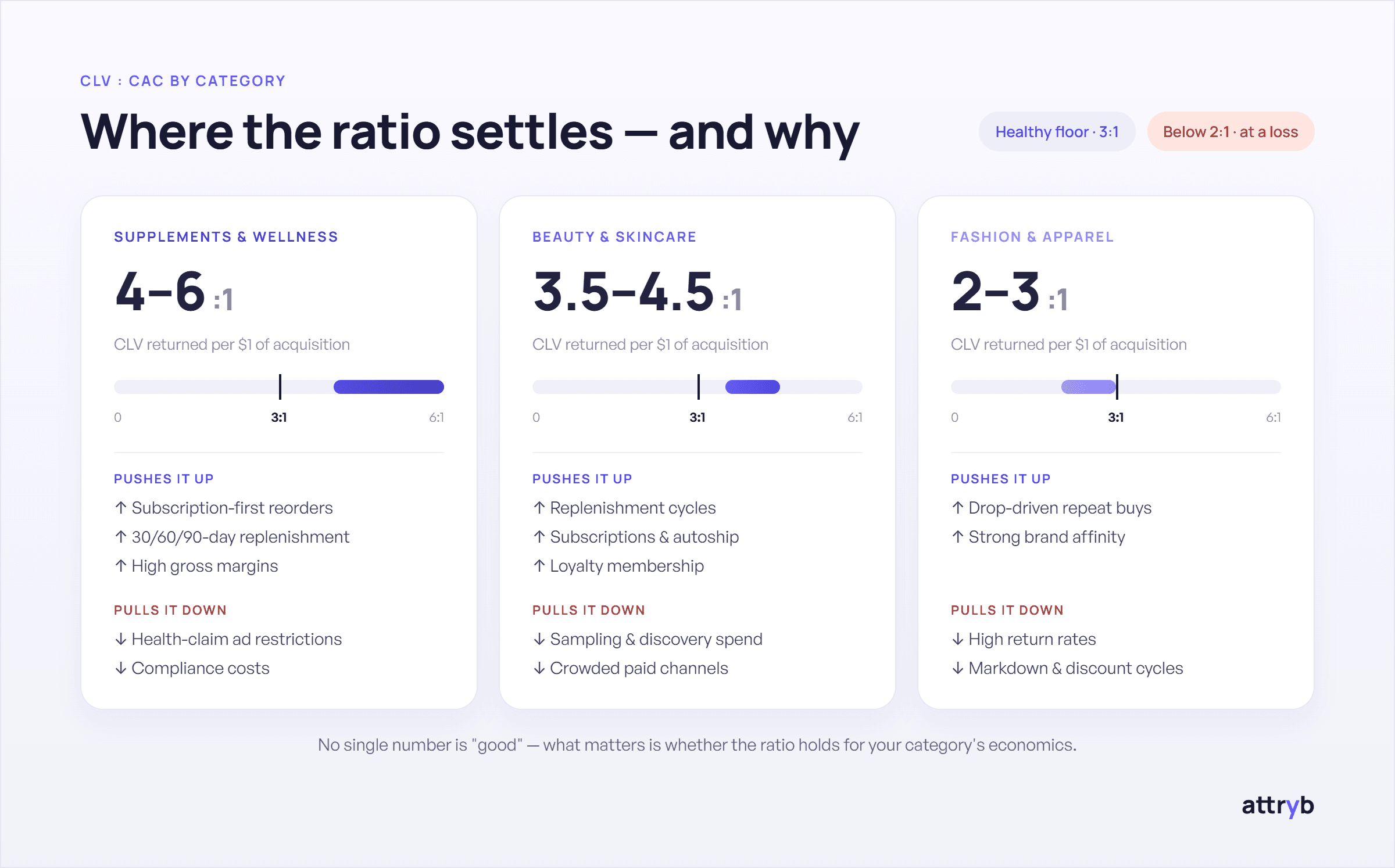
Figure 2. CLC:CAC ratio benchmarks across verticals
Why does CLV matter so much for D2C performance marketing?
D2C brands don't have a retail cushion. There's no partner absorbing some of the acquisition cost, no physical shelf to generate passive discovery. Every customer costs something to find and something to keep. That reality makes CLV essential rather than optional.
Three things make D2C brands particularly well-positioned to use CLV effectively:
They own their customer data. First-party purchase history, browsing behavior, email engagement - all of it is available to inform CLV segmentation in ways that brands relying on third-party retail simply can't replicate.
They control the retention experience. There's no intermediary between the brand and the post-purchase relationship. Email flows, loyalty programs, reorder reminders. D2C brands can run it all directly.
They carry the full margin stack. Which means optimizing CLV isn't just a marketing exercise. It shows up directly in business profitability.
What's the relationship between CLV and customer acquisition cost?
The CLV-to-CAC ratio is probably the single most useful diagnostic in D2C performance marketing. It tells you whether the economics of your customer acquisition are sustainable or whether you're growing at a loss and hoping volume solves the problem (it usually doesn't).
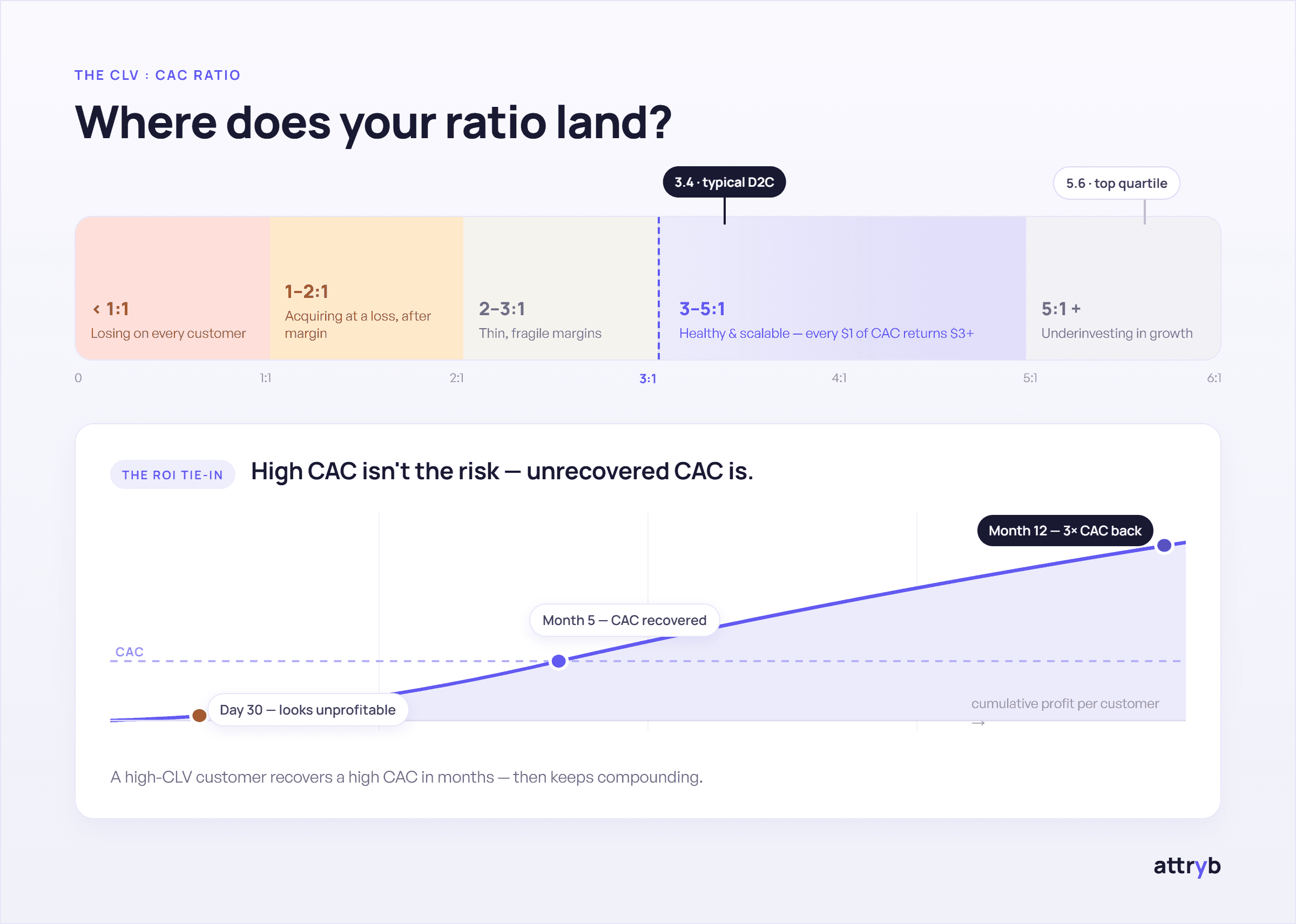
Figure 3. CLC:CAC ratio and what it means for your marketing
A ratio of 3.4 is the widely cited benchmark, with top quartile near 5.6. In practice, this means every dollar you spend acquiring a customer should eventually generate three dollars in lifetime value. The mechanics of improving the ratio fall into two buckets:
Reducing CAC
Tighten targeting for paid campaigns, so you're reaching people who are already close to buying, not just those in a broad interest category.
Build content and SEO as a lower-cost acquisition channel that compounds over time, rather than stopping the moment you cut the budget.
Increasing CLV
Loyalty programs that give customers a concrete reason to return rather than just a vague 'thank you for shopping with us' email.
Cross-sell and upsell sequences timed to actual purchase behavior, not generic promotional calendar blasts.
How does CLV change the way you measure marketing ROI?
A campaign that looks unprofitable at day 30 might look excellent at month 12, if the customers it brought in are high-retention buyers. That gap between what you see early and what actually happens is exactly why short-term ROI, on its own, can steer budgets in the wrong direction.
Brands that factor CLV into their ROI calculations make a specific trade-off: they accept slightly murkier short-term numbers in exchange for a much more accurate picture of which channels are actually building value. The ones that don't sometimes spend years optimizing toward channels that generate cheap, one-time buyers while underfunding channels that attract the customers who stick around.
How do you build CLV into campaign budgeting and planning?
Pull historical purchase and churn data before setting channel budgets. CLV forecasts built on real behavior are far more useful than industry benchmarks applied to your own numbers.
Segment audiences by CLV tier and allocate spend accordingly. If a particular customer profile generates 3x the lifetime value of another, the math usually supports spending more to acquire them — even if their CAC is higher.
Optimize for margin, not just volume. Balance volume and profitability by focusing on channels that attract higher-value customers, even if the cost per acquisition is slightly higher.
Which metrics should performance marketers track alongside CLV?
Average order value (AOV): The per-transaction input that feeds directly into CLV. Rising AOV with stable churn is a good sign.
Conversion rate: How efficiently campaigns turn leads into actual customers.
Lifetime conversion rate: The full count of how many times a single customer converts across their relationship with the brand.
Retention rate: This will give you an indication of how well you are retaining customers over time
Customer satisfaction (CSAT) or net promoter score (NPS): Satisfaction scores don't tie directly to revenue, but they correlate strongly with repeat purchase behavior. Low NPS is often a leading indicator of rising churn.
How does CLV segmentation make targeting and personalization more effective?
CLV segmentation lets you calibrate the experience to what each customer group actually needs.
High-CLV customers: Early access, exclusive offers, priority support. These customers are worth the white-glove treatment and they notice when they don't get it.
Mid-CLV customers: Upsell and cross-sell campaigns designed to move them into the top tier. The goal is activation and not just retention.
Low-CLV customers: Worth asking honestly whether the acquisition strategy that brought them in is the right one, or whether you're optimizing for volume at the expense of quality.
Personalization of ads and email campaigns (such as referencing a customer’s purchase history or past browsing behavior) can also help you to get the best out of your targeting efforts. D2C brands have the first-party data to do this properly. Most just don't prioritize it enough.
What tools help you measure and track CLV?
CRM platforms
Salesforce and HubSpot centralize customer data, track interactions over time, and generate lifetime value metrics with reasonable accuracy. The integration capabilities are strong. The setup cost and complexity can be a barrier for smaller brands that don't have a dedicated ops person.
Analytics platforms
Google Analytics and Adobe Analytics track the acquisition-to-conversion journey well but require custom configuration for proper CLV calculation. Google's free tier makes it accessible; both platforms have strong user communities and documentation.
Specialized CLV tools
Platforms built specifically for customer analytics like Attryb, Lifetimely, or Triple Whale offer cohort analysis, predictive modeling, and CLV segmentation out of the box. More powerful, but also more expensive and steeper to learn. Worth evaluating once the brand has enough data to make the modeling meaningful.
How to use data analytics to predict and improve CLV?
Predictive modeling: Regression analysis and machine learning algorithms can forecast how changes in purchase frequency or AOV will likely affect CLV before you make the change. It is useful for scenario planning before a pricing or product decision.
Cohort analysis: Groups customers by acquisition date or behavioral pattern. It helps distinguish between customers who look similar now but are trending in very different directions.
A/B testing: Tests marketing changes on smaller segments before full rollout. It lets you measure the CLV impact of a new retention tactic without betting the whole customer base on it.
What are the common challenges in measuring CLV, and how to overcome them?
Data that Isn't clean or connected
Fragmented customer data produces CLV figures you can't trust. The fix is less exciting than the analysis: consistent data hygiene, a unified customer database, and tracking protocols that stay stable over time.
Multi-channel attribution
Most customers touch several channels before they buy. Last-click attribution gives all the credit to the final touchpoint and completely misrepresents what actually influenced the decision. Multi-touch attribution models distribute credit more honestly. They're harder to implement but produce far more useful channel-level CLV data.
Customers don't behave predictably
The customer who bought once three years ago and the one who's bought fourteen times look very different, but a blended average might describe neither of them accurately. Advanced segmentation and machine learning handle this better than any rule-based model. They identify behavioral clusters instead of just averaging across them.
What tactics can increase customer retention?
Email marketing
If done well, email remains one of the highest-ROI retention tools available. Product recommendations based on actual purchase history, re-engagement sequences for customers who've gone quiet, anniversary or milestone offers. These consistently outperform generic promotional blasts. The personalization bar is higher than it used to be, but so is the payoff.
Loyalty programs
The best loyalty programs make switching feel like a loss. Reward points, tiered membership benefits, and early access to new products all raise the perceived cost of leaving. Gamification elements like streaks, challenges, status tiers give customers a reason to engage between purchases and not just during them.
Retargeting
Paid retargeting on Meta and Google recaptures customers who've gone cold with offers matched to their demonstrated interests. It works best when the creative reflects what someone actually looked at or bought, not just a generic brand ad served to anyone who visited the site once.
Content and community
Blogs, videos, and community spaces add value that exists outside the transaction. Customers who engage with a brand's content churn less and tend to have higher CLV even before you account for any direct conversion effect. It's a slow channel but a compounding one.
Cross-selling
Data on past purchases and browsing history both signal what a customer is likely to buy next. The timing matters more than most brands realize. A well-placed recommendation immediately after a purchase, or when usage patterns suggest the customer is ready for a complementary product, converts far better than a generic product push timed to a promotional calendar.
Final thoughts
CLV is one of those metrics that sounds strategic until you actually start using it. It changes which campaigns to fund, which channels to trust, and which customers you prioritize retaining. Performance marketing gives you the mechanism to act on that. CLV gives you the direction.
D2C brands that build both into their decision-making don't just grow faster. They build businesses with unit economics that actually hold up over time.
Frequently asked questions
What's a good CLV-to-CAC ratio for a D2C brand?
The standard benchmark is 3:1. Each customer should generate at least three times what it cost to acquire them. Ratios below 2:1 typically indicate that either acquisition channels are too expensive or retention is too weak. Ratios above 5:1 sometimes suggest underinvestment in growth, where the brand could afford to acquire more aggressively without damaging unit economics.
How often should we actually recalculate CLV?
Quarterly works for most D2C brands. If you change your pricing, launch a new product category, or overhaul a retention channel, recalculate sooner. Those changes shift the inputs enough that your previous figures may no longer reflect reality. Subscription businesses should run this monthly; churn compounds quickly and early signals matter more than retrospective ones.
Why does a new customer's CLV look so low?
Because it is for now. New customers have a shorter purchase history to draw from, so the calculation reflects where they are, not where they're going. That's why cohort analysis matters: a customer with two purchases in their first eight weeks may be trending toward high CLV even if the current figure looks modest. Don't use current CLV alone to write off recently acquired customers.
Can CLV tell us which marketing channels are actually worth it?
Yes, and this is one of the most practically useful applications. By comparing the average CLV of customers acquired through each channel, you can see which ones attract buyers who return versus ones who don't. A channel with a higher CAC but meaningfully better CLV often outperforms a cheaper channel over a 12-month window. Channel-level CLV analysis frequently reshuffles budget priorities in ways that pure acquisition metrics would never surface.
How much does personalization actually move CLV?
It moves it through two specific levers: purchase frequency and retention. Customers who receive recommendations tied to their actual purchase history buy more often. Customers who feel recognized by a brand through relevant communications, not just a first name in a subject line — churn less. D2C brands have the first-party data to do this well. The question is usually whether they've invested enough in the infrastructure to act on it.
Is predictive CLV more useful than historical CLV for budget decisions?
For forward-looking decisions, yes. Historical CLV tells you what happened. Predictive CLV tells you which newly acquired customers are likely to become high-value based on early behavioral signals — purchase frequency in the first 90 days, product category affinity, email engagement. Campaigns that use predictive CLV for audience targeting can front-load acquisition spend toward profiles the model identifies as likely high-retainers, which compounds into better long-term returns than targeting based on last-click efficiency alone.
Do referrals belong in a CLV calculation?
They should, but most standard models leave them out because they're harder to measure. A customer who refers two new buyers has a higher economic contribution to the brand than their direct purchase history alone suggests. For subscription businesses especially — where referred customers often show above-average retention, incorporating referral value produces a meaningfully more accurate picture of which segments are truly most profitable. If you can track it, include it.
What's the difference between CLV and LTV?
In most marketing contexts, the terms are used interchangeably. Some teams use LTV to mean gross revenue over the customer relationship and CLV to mean net profit — but there's no universal standard. What matters more than the label is whether your calculation accounts for margin, churn, and acquisition cost, or whether it stops at raw revenue. A CLV figure that ignores CAC and cost of goods is measuring the wrong thing regardless of what you call it.
We're a small D2C brand. Can we actually use CLV without enterprise tools?
Absolutely. The core CLV formula needs four inputs. AOV, purchase frequency, gross margin, and churn rate; all of which you can pull from standard e-commerce reporting. Google Analytics plus a basic CRM or even a well-organized spreadsheet gives you enough to segment customers and make better budget decisions. The enterprise tools offer predictive modeling and automated cohort analysis, which are genuinely useful at scale. But the fundamentals don't require a six-figure analytics stack.
Why should performance marketers care about customer lifetime value?
To run performance marketing efficiently, it is important that D2C brands understand Customer Lifetime Value (CLV). With this metric, brands can allocate the right budget to the right audiences, calculate the correct return on investment (ROI) for their marketing activities, and ultimately attract the most valuable customers to the brand. In the long run, the brand can grow sustainably with its most valuable customers, rather than focusing in the short term on acquiring new customers to drive up volume.
Performance marketing and customer lifetime value are two sides of the same coin. The CLV will tell you how much value a customer is worth over time, while the performance marketing will tell you how you spent your money to get the customer in the first place. So, a brand that truly wants to grow, not just acquire new customers, must have a grasp of both metrics.
What is performance marketing, and why does it matter for D2C brands?
Performance Marketing is a branch of digital marketing where advertisers pay only for specific, measurable actions. Each desired action, such as clicks to a website, new leads captured, and online sales, can be instantly monitored and measured with a price tag attached. You can read more about Performance Marketing in our comprehensive guide here.
For D2C brands, the structure is almost a necessity. You don't have a retailer absorbing some of the risk. Every acquisition cost lands directly on your books. Performance marketing enforces that discipline, and CLV tells you whether you’re measuring the right return.
What is customer lifetime value (CLV)?
CLV is the total net profit you can realistically expect from a single customer over the full course of your relationship with them. Not the first order. Not the best month. The whole thing — repeat purchases, eventual churn, referrals if they happen.
It's a deliberately long view. Two customers might place the same first order, but one comes back six times a year for three years and refers two friends. The other never returns. Their CLV isn't even close and treating them the same way — same acquisition spends, same retention effort — is a costly mistake.

Figure 1. Calculating CLV
How do you calculate CLV?
The standard formula most brands start with:
CLV = (Average Order Value × Purchase Frequency × Gross Margin) ÷ Churn Rate
Average order value (AOV): What the average customer spends per transaction.
Purchase frequency: How many times they buy in a given period.
Gross margin: Revenue minus cost of goods sold, divided by revenue.
Churn rate: The percentage of customers who stop buying over a given period.
Even the smallest variations in individual components have a significant effect on the calculated CLV. For example, a decrease of 10% in the churn rate will immediately increase the CLV of all customers by a large amount. That’s the leverage that makes CLV worth tracking closely.
What are the key factors that drive CLV?
Customer acquisition cost
CAC is what you spend to turn a prospect into a paying customer. The problem isn't having a CAC — it's having one that's out of proportion to what customers are actually worth. The benchmark most growth teams use is a CLV-to-CAC ratio of at least 3:1. Anything below 2:1 and you're probably acquiring customers at a loss when you factor in margin. Anything above 5:1 might mean you're leaving growth on the table.
Gross margin per customer
The difference between the revenue generated and the cost of goods sold (COGS). Higher margins generally yield a higher CLV.
Retention rate and churn
Retention Rate is the percentage of customers who remain active over a given time. The Churn Rate measures how quickly customers drop off. A brand retaining 85% of customers year-over-year builds a very different business than one retaining 70%, even if all other variables look similar. Loyalty programs and good post-purchase communication are the two most reliable tools for moving this number.
Referral value
Some customers bring in other customers. That referred revenue reflects the original customer's economic contribution to your brand, even if standard CLV formulas exclude it. For subscription and SaaS businesses especially, referral value adds a meaningful dimension to CLV that pure transactional metrics miss.
Customer satisfaction and lifecycle stage
CLV is also affected by customer satisfaction. Satisfied customers behave differently than unsatisfied ones, as they buy more frequently and refer their friends and family more freely.
Understanding the behavior of new customers compared with repeat customers is essential for maximizing returns. Therefore, customers need to be segmented by their lifecycle stage (new, repeat, loyal) to accurately understand their CLV and invest in the most optimal way.
How does CLV vary across different industries?
Across several industries, a customer's CLV can vary quite a bit. Luxury fashion brands often see infrequent purchases at high AOV. Fast-moving consumer goods brands see the reverse. Neither is better - what matters is whether the CLV-to-CAC ratio holds given the economics of that specific category.
E-commerce brands face return rates and shipping costs that compress margins and, in turn, CLV. D2C brands can partially offset this by improving retention and building direct customer relationships. SaaS and subscription businesses tie CLV almost entirely to churn - which is why those companies track monthly recurring revenue so obsessively. One percentage point of churn in a subscription model matters more than most other metrics combined.

Figure 2. CLC:CAC ratio benchmarks across verticals
Why does CLV matter so much for D2C performance marketing?
D2C brands don't have a retail cushion. There's no partner absorbing some of the acquisition cost, no physical shelf to generate passive discovery. Every customer costs something to find and something to keep. That reality makes CLV essential rather than optional.
Three things make D2C brands particularly well-positioned to use CLV effectively:
They own their customer data. First-party purchase history, browsing behavior, email engagement - all of it is available to inform CLV segmentation in ways that brands relying on third-party retail simply can't replicate.
They control the retention experience. There's no intermediary between the brand and the post-purchase relationship. Email flows, loyalty programs, reorder reminders. D2C brands can run it all directly.
They carry the full margin stack. Which means optimizing CLV isn't just a marketing exercise. It shows up directly in business profitability.
What's the relationship between CLV and customer acquisition cost?
The CLV-to-CAC ratio is probably the single most useful diagnostic in D2C performance marketing. It tells you whether the economics of your customer acquisition are sustainable or whether you're growing at a loss and hoping volume solves the problem (it usually doesn't).

Figure 3. CLC:CAC ratio and what it means for your marketing
A ratio of 3.4 is the widely cited benchmark, with top quartile near 5.6. In practice, this means every dollar you spend acquiring a customer should eventually generate three dollars in lifetime value. The mechanics of improving the ratio fall into two buckets:
Reducing CAC
Tighten targeting for paid campaigns, so you're reaching people who are already close to buying, not just those in a broad interest category.
Build content and SEO as a lower-cost acquisition channel that compounds over time, rather than stopping the moment you cut the budget.
Increasing CLV
Loyalty programs that give customers a concrete reason to return rather than just a vague 'thank you for shopping with us' email.
Cross-sell and upsell sequences timed to actual purchase behavior, not generic promotional calendar blasts.
How does CLV change the way you measure marketing ROI?
A campaign that looks unprofitable at day 30 might look excellent at month 12, if the customers it brought in are high-retention buyers. That gap between what you see early and what actually happens is exactly why short-term ROI, on its own, can steer budgets in the wrong direction.
Brands that factor CLV into their ROI calculations make a specific trade-off: they accept slightly murkier short-term numbers in exchange for a much more accurate picture of which channels are actually building value. The ones that don't sometimes spend years optimizing toward channels that generate cheap, one-time buyers while underfunding channels that attract the customers who stick around.
How do you build CLV into campaign budgeting and planning?
Pull historical purchase and churn data before setting channel budgets. CLV forecasts built on real behavior are far more useful than industry benchmarks applied to your own numbers.
Segment audiences by CLV tier and allocate spend accordingly. If a particular customer profile generates 3x the lifetime value of another, the math usually supports spending more to acquire them — even if their CAC is higher.
Optimize for margin, not just volume. Balance volume and profitability by focusing on channels that attract higher-value customers, even if the cost per acquisition is slightly higher.
Which metrics should performance marketers track alongside CLV?
Average order value (AOV): The per-transaction input that feeds directly into CLV. Rising AOV with stable churn is a good sign.
Conversion rate: How efficiently campaigns turn leads into actual customers.
Lifetime conversion rate: The full count of how many times a single customer converts across their relationship with the brand.
Retention rate: This will give you an indication of how well you are retaining customers over time
Customer satisfaction (CSAT) or net promoter score (NPS): Satisfaction scores don't tie directly to revenue, but they correlate strongly with repeat purchase behavior. Low NPS is often a leading indicator of rising churn.
How does CLV segmentation make targeting and personalization more effective?
CLV segmentation lets you calibrate the experience to what each customer group actually needs.
High-CLV customers: Early access, exclusive offers, priority support. These customers are worth the white-glove treatment and they notice when they don't get it.
Mid-CLV customers: Upsell and cross-sell campaigns designed to move them into the top tier. The goal is activation and not just retention.
Low-CLV customers: Worth asking honestly whether the acquisition strategy that brought them in is the right one, or whether you're optimizing for volume at the expense of quality.
Personalization of ads and email campaigns (such as referencing a customer’s purchase history or past browsing behavior) can also help you to get the best out of your targeting efforts. D2C brands have the first-party data to do this properly. Most just don't prioritize it enough.
What tools help you measure and track CLV?
CRM platforms
Salesforce and HubSpot centralize customer data, track interactions over time, and generate lifetime value metrics with reasonable accuracy. The integration capabilities are strong. The setup cost and complexity can be a barrier for smaller brands that don't have a dedicated ops person.
Analytics platforms
Google Analytics and Adobe Analytics track the acquisition-to-conversion journey well but require custom configuration for proper CLV calculation. Google's free tier makes it accessible; both platforms have strong user communities and documentation.
Specialized CLV tools
Platforms built specifically for customer analytics like Attryb, Lifetimely, or Triple Whale offer cohort analysis, predictive modeling, and CLV segmentation out of the box. More powerful, but also more expensive and steeper to learn. Worth evaluating once the brand has enough data to make the modeling meaningful.
How to use data analytics to predict and improve CLV?
Predictive modeling: Regression analysis and machine learning algorithms can forecast how changes in purchase frequency or AOV will likely affect CLV before you make the change. It is useful for scenario planning before a pricing or product decision.
Cohort analysis: Groups customers by acquisition date or behavioral pattern. It helps distinguish between customers who look similar now but are trending in very different directions.
A/B testing: Tests marketing changes on smaller segments before full rollout. It lets you measure the CLV impact of a new retention tactic without betting the whole customer base on it.
What are the common challenges in measuring CLV, and how to overcome them?
Data that Isn't clean or connected
Fragmented customer data produces CLV figures you can't trust. The fix is less exciting than the analysis: consistent data hygiene, a unified customer database, and tracking protocols that stay stable over time.
Multi-channel attribution
Most customers touch several channels before they buy. Last-click attribution gives all the credit to the final touchpoint and completely misrepresents what actually influenced the decision. Multi-touch attribution models distribute credit more honestly. They're harder to implement but produce far more useful channel-level CLV data.
Customers don't behave predictably
The customer who bought once three years ago and the one who's bought fourteen times look very different, but a blended average might describe neither of them accurately. Advanced segmentation and machine learning handle this better than any rule-based model. They identify behavioral clusters instead of just averaging across them.
What tactics can increase customer retention?
Email marketing
If done well, email remains one of the highest-ROI retention tools available. Product recommendations based on actual purchase history, re-engagement sequences for customers who've gone quiet, anniversary or milestone offers. These consistently outperform generic promotional blasts. The personalization bar is higher than it used to be, but so is the payoff.
Loyalty programs
The best loyalty programs make switching feel like a loss. Reward points, tiered membership benefits, and early access to new products all raise the perceived cost of leaving. Gamification elements like streaks, challenges, status tiers give customers a reason to engage between purchases and not just during them.
Retargeting
Paid retargeting on Meta and Google recaptures customers who've gone cold with offers matched to their demonstrated interests. It works best when the creative reflects what someone actually looked at or bought, not just a generic brand ad served to anyone who visited the site once.
Content and community
Blogs, videos, and community spaces add value that exists outside the transaction. Customers who engage with a brand's content churn less and tend to have higher CLV even before you account for any direct conversion effect. It's a slow channel but a compounding one.
Cross-selling
Data on past purchases and browsing history both signal what a customer is likely to buy next. The timing matters more than most brands realize. A well-placed recommendation immediately after a purchase, or when usage patterns suggest the customer is ready for a complementary product, converts far better than a generic product push timed to a promotional calendar.
Final thoughts
CLV is one of those metrics that sounds strategic until you actually start using it. It changes which campaigns to fund, which channels to trust, and which customers you prioritize retaining. Performance marketing gives you the mechanism to act on that. CLV gives you the direction.
D2C brands that build both into their decision-making don't just grow faster. They build businesses with unit economics that actually hold up over time.
Frequently asked questions
What's a good CLV-to-CAC ratio for a D2C brand?
The standard benchmark is 3:1. Each customer should generate at least three times what it cost to acquire them. Ratios below 2:1 typically indicate that either acquisition channels are too expensive or retention is too weak. Ratios above 5:1 sometimes suggest underinvestment in growth, where the brand could afford to acquire more aggressively without damaging unit economics.
How often should we actually recalculate CLV?
Quarterly works for most D2C brands. If you change your pricing, launch a new product category, or overhaul a retention channel, recalculate sooner. Those changes shift the inputs enough that your previous figures may no longer reflect reality. Subscription businesses should run this monthly; churn compounds quickly and early signals matter more than retrospective ones.
Why does a new customer's CLV look so low?
Because it is for now. New customers have a shorter purchase history to draw from, so the calculation reflects where they are, not where they're going. That's why cohort analysis matters: a customer with two purchases in their first eight weeks may be trending toward high CLV even if the current figure looks modest. Don't use current CLV alone to write off recently acquired customers.
Can CLV tell us which marketing channels are actually worth it?
Yes, and this is one of the most practically useful applications. By comparing the average CLV of customers acquired through each channel, you can see which ones attract buyers who return versus ones who don't. A channel with a higher CAC but meaningfully better CLV often outperforms a cheaper channel over a 12-month window. Channel-level CLV analysis frequently reshuffles budget priorities in ways that pure acquisition metrics would never surface.
How much does personalization actually move CLV?
It moves it through two specific levers: purchase frequency and retention. Customers who receive recommendations tied to their actual purchase history buy more often. Customers who feel recognized by a brand through relevant communications, not just a first name in a subject line — churn less. D2C brands have the first-party data to do this well. The question is usually whether they've invested enough in the infrastructure to act on it.
Is predictive CLV more useful than historical CLV for budget decisions?
For forward-looking decisions, yes. Historical CLV tells you what happened. Predictive CLV tells you which newly acquired customers are likely to become high-value based on early behavioral signals — purchase frequency in the first 90 days, product category affinity, email engagement. Campaigns that use predictive CLV for audience targeting can front-load acquisition spend toward profiles the model identifies as likely high-retainers, which compounds into better long-term returns than targeting based on last-click efficiency alone.
Do referrals belong in a CLV calculation?
They should, but most standard models leave them out because they're harder to measure. A customer who refers two new buyers has a higher economic contribution to the brand than their direct purchase history alone suggests. For subscription businesses especially — where referred customers often show above-average retention, incorporating referral value produces a meaningfully more accurate picture of which segments are truly most profitable. If you can track it, include it.
What's the difference between CLV and LTV?
In most marketing contexts, the terms are used interchangeably. Some teams use LTV to mean gross revenue over the customer relationship and CLV to mean net profit — but there's no universal standard. What matters more than the label is whether your calculation accounts for margin, churn, and acquisition cost, or whether it stops at raw revenue. A CLV figure that ignores CAC and cost of goods is measuring the wrong thing regardless of what you call it.
We're a small D2C brand. Can we actually use CLV without enterprise tools?
Absolutely. The core CLV formula needs four inputs. AOV, purchase frequency, gross margin, and churn rate; all of which you can pull from standard e-commerce reporting. Google Analytics plus a basic CRM or even a well-organized spreadsheet gives you enough to segment customers and make better budget decisions. The enterprise tools offer predictive modeling and automated cohort analysis, which are genuinely useful at scale. But the fundamentals don't require a six-figure analytics stack.

Share:
Share:

Boost Sales Now
Join the leading D2C brands leveraging Attryb to deliver personalized experiences that drive measurable growth


Boost Sales Now
Join the leading D2C brands leveraging Attryb to deliver personalized experiences that drive measurable growth


Boost Sales Now
Join the leading D2C brands leveraging Attryb to deliver personalized experiences that drive measurable growth

Keep Reading
Load More